
Metabolic harmony without shame
If you have PCOS, insulin resistance, hormone-related fatigue, or constant blood sugar swings, you may already know how exhausting it feels to be told to just “lose weight” or “cut carbs.” Our care offers a different path.
At Actualize Counseling & Nutrition, we provide integrated therapy and nutrition support for hormonal health that treats the whole person — physiology, stress, food relationship, and the emotional fallout of living in a body that feels hard to manage.
“You just need more willpower”
That message misses the biology. Metabolic efficiency, insulin resistance, and chronic stress all affect how your body processes energy.
Restriction, food fear, and shame
Harsh dieting can worsen blood sugar instability, heighten cravings, and intensify binge-restrict cycles instead of bringing real balance.
Physiological stability + emotional peace
We help you stabilize nourishment, understand your metabolism, and reduce the panic and self-blame that often surround hormonal symptoms.
A therapist and dietitian working together
You get one coordinated plan for both the body and the mind, rather than fragmented care that leaves you carrying the whole puzzle alone.
Your body is not broken. It is asking to be understood differently.
PCOS and hormonal instability are not signs that you are lazy, weak, or failing. Many people with PCOS are living inside a body that is metabolically efficient, stress-sensitive, and easily pushed into survival mode by restriction, shame, and chronic pressure.
Metabolic efficiency is not a moral flaw
Some bodies are simply wired to hold onto energy more efficiently. That reality deserves understanding, not punishment.
Insulin resistance can feel like “cellular starvation”
When cells struggle to use glucose well, energy can feel unstable, cravings can get louder, and food thoughts can start to feel relentless.
Weight stigma can become its own injury
Being reduced to “just lose weight” can create shame, mistrust, medical trauma, and more disordered eating — not better health.
Health needs more than a generic prescription
Real support has to address food, stress, body image, energy, blood sugar, and the nervous system all together.
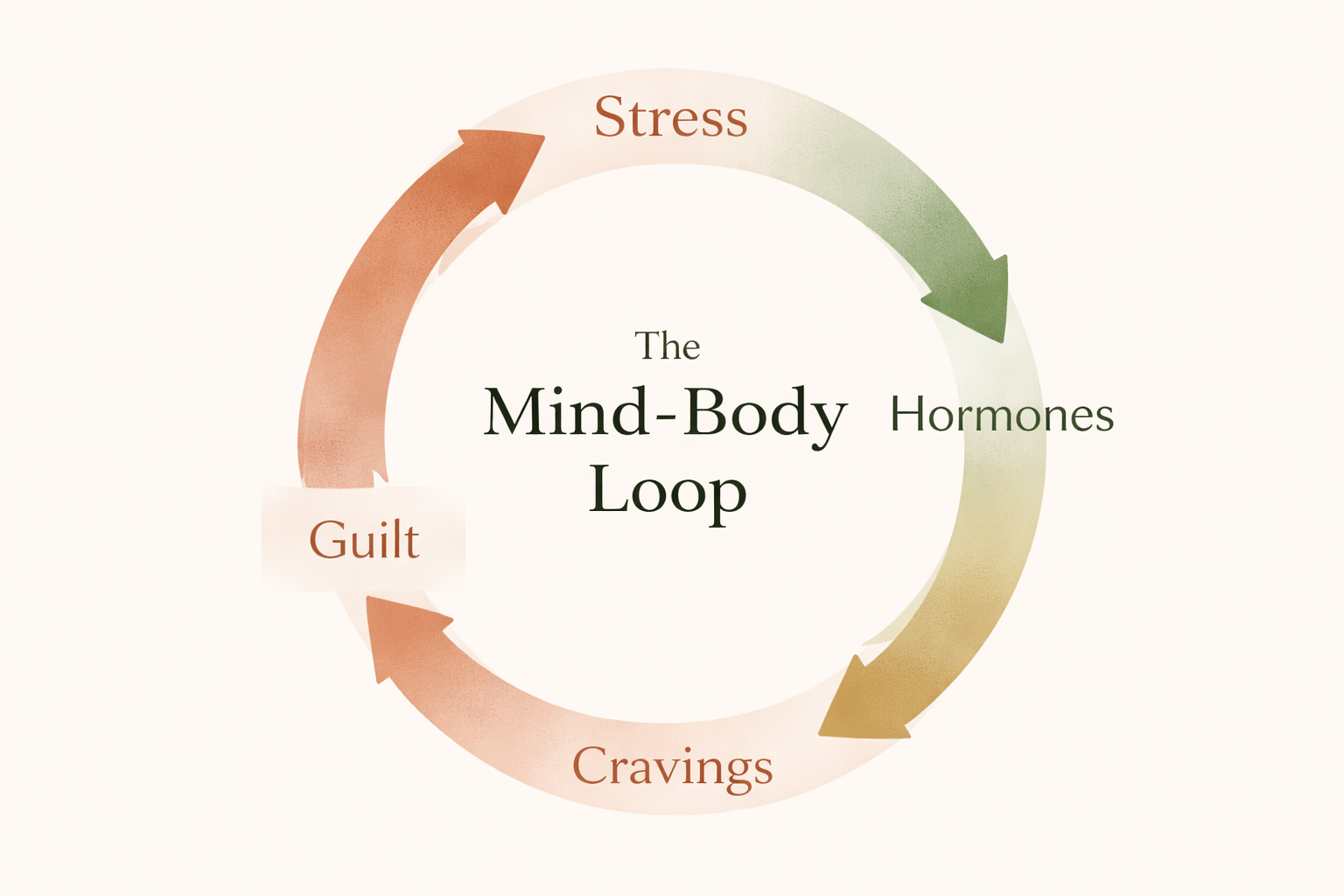
Why symptoms often feel both physical and emotional
PCOS and insulin resistance do not live only in your lab work. They affect energy, food thoughts, mood, concentration, self-esteem, and how safe your body feels day to day.
When insulin is not working efficiently, your body can send louder signals for quick fuel. That is why cravings and “food noise” can feel so intense. It is not simply a discipline problem.
Chronic stress adds fuel to the fire. Elevated cortisol can worsen blood sugar instability, fatigue, and brain fog. Then the distress of those symptoms creates even more pressure, which keeps the cycle going.
Cortisol can worsen the metabolic fire
A chronically activated nervous system can interfere with blood sugar regulation, increase exhaustion, and make symptoms harder to manage.
Restriction often makes things worse
Severe calorie deficits and carb fear can intensify the famine response, increase cravings, and create bigger spikes and crashes.
Symptoms can become a constant source of shame
Body dissatisfaction, medical dismissal, and the pressure to control everything can make hormonal health feel emotionally brutal.
A unified front for real healing
Western medicine often separates body and mind. We do not. Our integrated care model pairs you with a therapist and registered dietitian who share a unified treatment philosophy and work together around one coherent plan.
Healing the body and metabolism
Your dietitian helps regulate blood sugar, reduce food chaos, dismantle rigid rules, and build consistent eating patterns that support insulin sensitivity without shame or starvation.
Healing the mind and nervous system
Your therapist helps you work with anxiety, body image distress, inner criticism, trauma responses, and the emotional burden of living with a chronic condition.
How we support metabolic harmony
Our care is weight-inclusive, evidence-based, and designed to help you feel physiologically steadier without turning food into a battle.
Addition, not subtraction
We do not build healing around deprivation. We focus on consistent nourishment, steadier blood sugar, and flexible meal patterns that support your life.
Food pairing that lowers the rollercoaster
Protein, fats, fiber, and thoughtful carbohydrate support can reduce crashes, quiet urgency, and help your body use energy more steadily.
Less inner critic, more flexibility
We help you build distress tolerance, self-compassion, and values-based decision-making so symptoms do not get to define your whole life.
Support for co-occurring concerns
GI issues, binge-restrict cycles, fatigue, medication side effects, and body distrust are all welcome in the room here.


You do not have to choose between metabolic care and mental peace
Healing is not just lower panic around lab work. It is a more livable relationship with food, movement, symptoms, and your own body.
Going out to dinner without panicking about carbs
Meals become less about fear and control, and more about nourishment, satisfaction, and real life.
Moving your body for vitality, not punishment
Exercise stops being a tool for body correction and becomes something that can support energy, mood, and connection.
A body you work with instead of fight against
The goal is not perfect control. It is steadier energy, less shame, and a deeper sense that your body makes sense again.
Frequently asked questions about PCOS and hormonal health support
A few answers to the questions people often carry before they reach out.
Can I manage PCOS naturally?
Do I have to lose weight to work with you?
What if I am not sure whether I have PCOS?
Can therapy really help with a hormonal condition?
Will your dietitian make me cut out carbs?
How do I get started?
Still have questions?
Reach out anytime. We are here to help you find a calmer, more sustainable path forward.
You do not have to navigate hormones, food, and stress alone anymore
Bring your frustrations, your exhaustion, and your questions. We will listen without judgment and help you build a path toward steadier metabolic and emotional health.